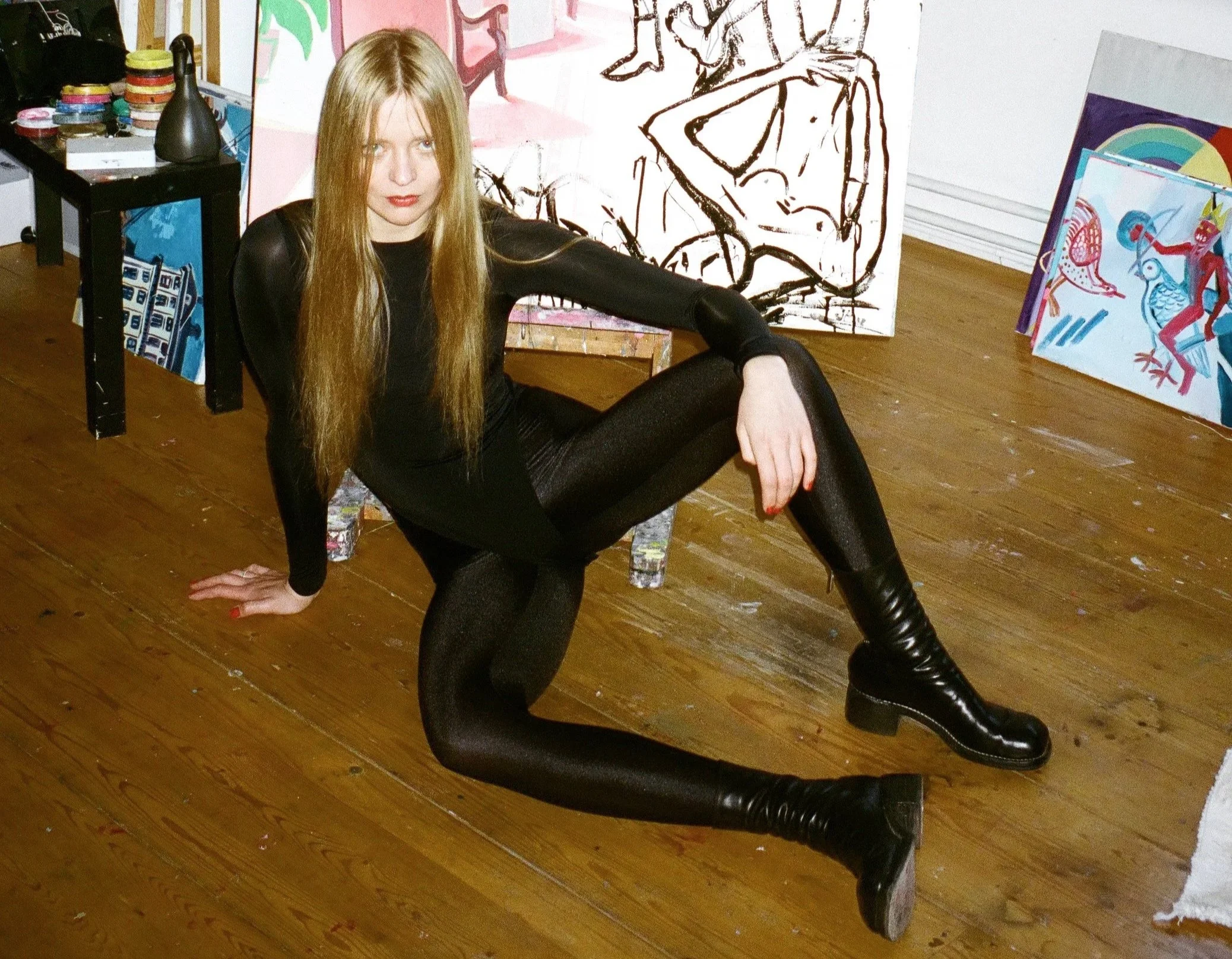
Julia Kiryanova (Amsterdam, The Netherlands)
Julia Kiryanova develops immersive environments in which painting, textile, spatial installation, live sound, and durational performance unfold as a single evolving work.
Working across these interconnected forms, she creates large-scale environments that are activated through collective performances involving body-painted and nude performers. Rather than functioning as separate disciplines, painting, textile, choreography, and sound operate as parts of one spatial system in continuous transformation.
The body is approached not as an image but as a living material that shapes and is shaped by its surroundings. Through duration, repetition, and collective presence, the work explores vulnerability, fragility, intimacy, and the shifting relationships between bodies, space, and material. Painted surfaces, textiles, and architectural elements accumulate traces of each activation, allowing every project to evolve over time.
Each installation responds to its site while continuing an ongoing investigation into how shared environments can generate new forms of perception, encounter, and collective experience.